Introduction
1 Intitulé et déroulé du cours
Mise à jour du 18/10 :
Le cours est mis à jour mais seul compte le cours en présentiel. Actuellement, les étudiants du groupe 1 et 2 ont vu les bases de la régression.
“L5GEABIM Analyses bivariées et multivariées”
| num.cours | Date.gr.1.et.2 | date.gr.3 | pb.fermeture | thème | outil | exercice.nb.pts |
|---|---|---|---|---|---|---|
| 1 | 21.09.26 | 18.09.26 | statistique univariée base | tableur | 1 | |
| 2 | 28.09.26 | 25.09.26 | blocage moodle enseignant | statistique univariée indicateurs | 2 | |
| 3 | 05.10.26 | 02.10.26 | blocus au 2/10 et 5/ 10 | NA | ||
| 4 | 12.10.26 | 09.10.26 | fermeture administrative 9/10, filtrage entrées puis fermeture le 12/10 | Gr lundi uniquement - bivariée : base + régression début | NA | |
| 5 | 19.10.26 | 16.10.26 | fermeture administrative le 16/10 | Gr lunid : régression fin + khi début (tableau de contingence) | NA | |
| NA | 26.10.26 | 23.10.26 | CONGES | Khi2 + devoir gr 1 et 2 en guise de cours 1 | 2 | |
| 6 | 02.11.26 | 30.10.26 | CONGES gr 1 et 2 / initiation R gr 3 | R | NA | |
| 7 | 09.11.26 | 06.11.26 | initiation R gr 1 et 2 / CONGES gr 3 | NA | ||
| 8 | 16.11.26 | 13.11.26 | initiation R / boite à moustaches | 1 | ||
| 9 | 23.11.26 | 20.11.26 | initiation R / variance + sujet DM | NA | ||
| 10 | 30.11.26 | 27.11.26 | multivariée : boucle R et mise en forme des données (part 1 – régression multiple) | NA | ||
| 11 | 07.12.26 | 04.12.26 | multivariée : régression multiple (part 2) et script analyse factorielle et classification | NA | ||
| 12 | 14.12.26 | 11.12.26 | multivariée : analyse factorielle et classification (données centrées réduites) | NA | ||
| 13 | 18.12.26 | questions autour du devoir maison et confirmation groupe partiel | NA | |||
| 14 | à préciser | à préciser | révision gr3 (feuille révisions gr 1 et 2) | NA | ||
| NA | partiel | NA |
Comptes des villes et élections municipales : quels sont les liens ?
2 La donnée
2.1 Où la trouver ?
Data.gouv, portail externe voire portail cartographique
2.1.1 Data.gouv
définir avec wikipedia, que retenir par rapport à l’IA ?
apprendre à chercher :
les élections (que préciser ?)
les finances des communes (mot clé compte des communes)
2.1.2 Données élections
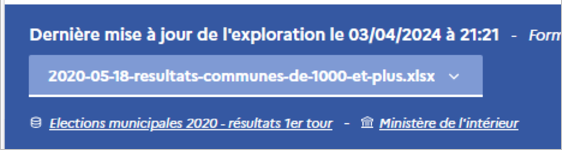
Il s’agit d’extraire les résultats municipales 1er tour 2020, le filtre est possible sur la zone géographique
choix : élections municipales 2020 - 1er tour - plus de 1000 hbts - en .xls (sinon pas de filtre)
bouton explorer les données

Bien vérifier qu’il s’agit du bon fichier
Poser le filtre sur le dpt
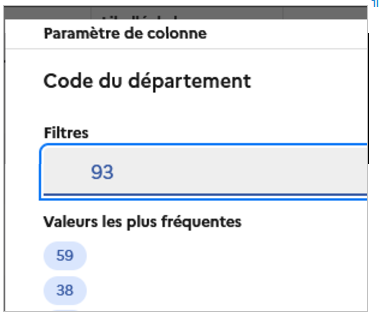
Et importer les données uniquement les données filtrées

Le fichier obtenu sera en .csv
2.1.3 Le portail externe
Trouver la source originale pour les comptes des communes et apprendre à utiliser cet outil plutôt que le fichier de data.gouv
car : 23 millions d’observations au total, un fichier de 6 G°de données

2.1.4 Portail cartographique
Utiliser l’outil proposé par l’OFGL
Quel est l’apport de la cartographie ?
2.2 Extraire la donnée à partir du portail externe
Explication des différents filtres
2.2.1 Choix de base : compte consolidé et année
- compte consolidé

- pour le premier cours, ne pas faire de choix d’agrégat
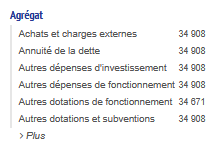
Sur la notion d’agrégat, au minimum :
Savoir distinguer investissement et fonctionnement
Dans quelle catégorie classer les frais de personnel ?
2.2.2 La commune : un choix géographique différent par étudiant
Chaque étudiant choisit une commune et indique son code INSEE
lieu <- read.csv("data/insee.csv")
lieu <- lieu [!is.na(lieu)]
suppressMessages(library(sf))
communes <- st_read("data/gros/communes-1000m.geojson", quiet = T)
region <- st_read("data/regions-20140306-100m.shp", quiet = T)
region$code_insee <- as.integer(region$code_insee)
region <- region [region$code_insee > 10,]
data <- communes [communes$code %in% lieu,]
5 communes problématiques
## character(0)lieu <- c(lieu,"94028", "94003", "06088", "94037", "92062", "94080" )
data <- communes [communes$code %in% lieu,]Cartographie des choix étudiants
library(mapsf)
mf_map(region, col = "wheat", border="cornsilk")
mf_map(st_buffer(data, 10000), col= "red", add = T, border = NA)
mf_layout("Choix des communes\n(tampons autour des communes)", "data.gouv et sources internes\nseptembre 2026")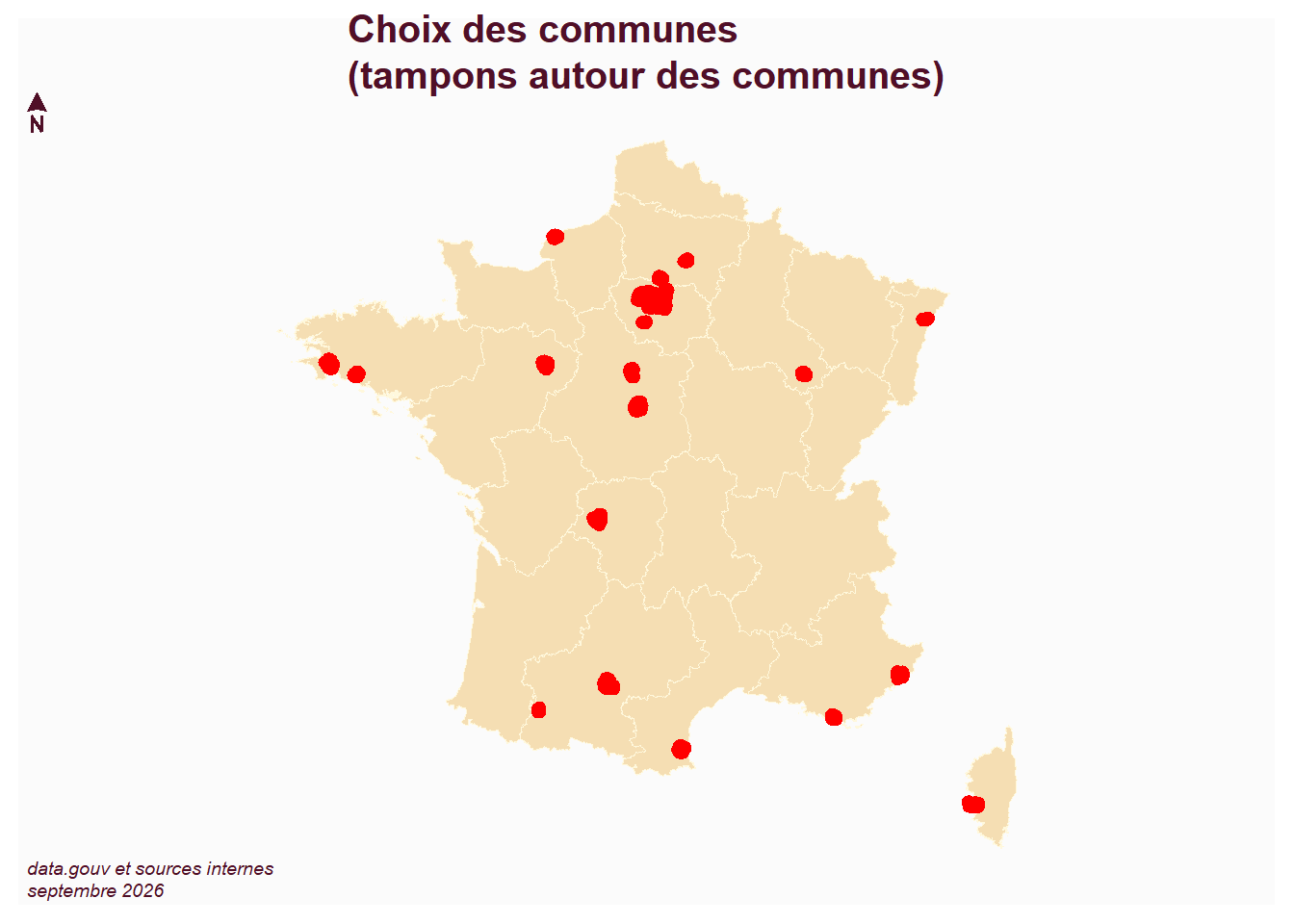
## The scale bar cannot be displayed on unprojected (long/lat) maps.Enregistrement de la donnée
2.2.3 Choix pour le cours
Le cours sera basé sur la commune de Bondy (49 enregistrements pour tous les agrégats) et le département du 93 (1967 enregistrements)
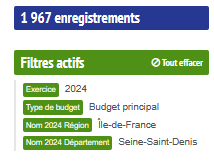
A noter, sélectionner la région permet de choisir plus facilement le département 93
##  [1] "Exercice"
##  [2] "Outre.mer"
##  [3] "Code.Insee.2025.Région"
##  [4] "Nom.2025.Région"
##  [5] "Code.Insee.2025.Département"
##  [6] "Nom.2025.Département"
##  [7] "Code.Siren.2025.EPCI"
##  [8] "Nom.2025.EPCI"
##  [9] "Strate.population.2025"
## [10] "Commune.rurale"
## [11] "Commune.de.montagne"
## [12] "Commune.touristique"
## [13] "Tranche.revenu.par.habitant"
## [14] "Présence.QPV"
## [15] "Code.Insee.2025.Commune"
## [16] "Nom.2025.Commune"
## [17] "Catégorie"
## [18] "Code.Siren.Collectivité"
## [19] "Code.Insee.Collectivité"
## [20] "Libellé.Budget"
## [21] "Agrégat"
## [22] "Montant.BP"
## [23] "Montant.BA"
## [24] "Montant.flux.BP.BA"
## [25] "Montant"
## [26] "Montant.en.millions"
## [27] "Population.totale"
## [28] "Montant.en...par.habitant"
## [29] "Compte.2025.Disponible"
## [30] "ordre_analyse1_section1"
## [31] "ordre_analyse1_section2"
## [32] "ordre_analyse1_section3"
## [33] "ordre_analyse2_section1"
## [34] "ordre_analyse2_section2"
## [35] "ordre_analyse2_section3"
## [36] "ordre_analyse3_section1"
## [37] "ordre_analyse3_section2"
## [38] "ordre_analyse3_section3"
## [39] "ordre_analyse4_section1"
## [40] "annee_join"
## [41] "Population.totale.du.dernier.exercice"## Exercice Outre.mer Code.Insee.2025.Région Nom.2025.Région
## 1 2025 Non 11 Île-de-France
## 2 2025 Non 11 Île-de-France
## 3 2025 Non 11 Île-de-France
## 4 2025 Non 11 Île-de-France
## 5 2025 Non 11 Île-de-France
## 6 2025 Non 11 Île-de-France
## Code.Insee.2025.Département Nom.2025.Département Code.Siren.2025.EPCI
## 1 93 Seine-Saint-Denis 200057875
## 2 93 Seine-Saint-Denis 200057875
## 3 93 Seine-Saint-Denis 200057875
## 4 93 Seine-Saint-Denis 200057875
## 5 93 Seine-Saint-Denis 200057875
## 6 93 Seine-Saint-Denis 200057875
## Nom.2025.EPCI Strate.population.2025 Commune.rurale Commune.de.montagne
## 1 Est Ensemble 9 Non Non
## 2 Est Ensemble 9 Non Non
## 3 Est Ensemble 9 Non Non
## 4 Est Ensemble 9 Non Non
## 5 Est Ensemble 9 Non Non
## 6 Est Ensemble 9 Non Non
## Commune.touristique Tranche.revenu.par.habitant Présence.QPV
## 1 Non 1 Oui
## 2 Non 1 Oui
## 3 Non 1 Oui
## 4 Non 1 Oui
## 5 Non 1 Oui
## 6 Non 1 Oui
## Code.Insee.2025.Commune Nom.2025.Commune Catégorie Code.Siren.Collectivité
## 1 93010 Bondy Commune 219300100
## 2 93010 Bondy Commune 219300100
## 3 93010 Bondy Commune 219300100
## 4 93010 Bondy Commune 219300100
## 5 93010 Bondy Commune 219300100
## 6 93010 Bondy Commune 219300100
## Code.Insee.Collectivité Libellé.Budget Agrégat
## 1 93010 BONDY Dépôts au Trésor
## 2 93010 BONDY Dépenses d'intervention
## 3 93010 BONDY Dépenses d'investissement hors remb
## 4 93010 BONDY Dépenses de fonctionnement
## 5 93010 BONDY Impôts locaux
## 6 93010 BONDY Recettes de fonctionnement
## Montant.BP Montant.BA Montant.flux.BP.BA Montant Montant.en.millions
## 1 19636834 0 0 19636834 19.636834
## 2 5322354 0 0 5322354 5.322354
## 3 12639966 0 0 12639966 12.639966
## 4 82353832 0 0 82353832 82.353832
## 5 53089924 0 0 53089924 53.089924
## 6 95956845 0 0 95956845 95.956845
## Population.totale Montant.en...par.habitant Compte.2025.Disponible
## 1 51239 383.2400 1
## 2 51239 103.8731 1
## 3 51239 246.6864 1
## 4 51239 1607.2490 1
## 5 51239 1036.1233 1
## 6 51239 1872.7306 1
## ordre_analyse1_section1 ordre_analyse1_section2 ordre_analyse1_section3
## 1 NA NA NA
## 2 NA NA NA
## 3 NA 5 NA
## 4 NA 4 NA
## 5 NA NA NA
## 6 4 NA NA
## ordre_analyse2_section1 ordre_analyse2_section2 ordre_analyse2_section3
## 1 NA NA NA
## 2 NA 4 NA
## 3 NA NA NA
## 4 NA 1 2
## 5 NA NA NA
## 6 1 NA 1
## ordre_analyse3_section1 ordre_analyse3_section2 ordre_analyse3_section3
## 1 NA NA NA
## 2 NA NA NA
## 3 NA 1 1
## 4 NA NA NA
## 5 NA NA NA
## 6 NA NA NA
## ordre_analyse4_section1 annee_join Population.totale.du.dernier.exercice
## 1 2 2025 51239
## 2 NA 2025 51239
## 3 NA 2025 51239
## 4 NA 2025 51239
## 5 NA 2025 51239
## 6 NA 2025 51239## 'data.frame': 49 obs. of 41 variables:
## $ Exercice : int 2025 2025 2025 2025 2025 2025 2025 2025 2025 2025 ...
## $ Outre.mer : chr "Non" "Non" "Non" "Non" ...
## $ Code.Insee.2025.Région : int 11 11 11 11 11 11 11 11 11 11 ...
## $ Nom.2025.Région : chr "Île-de-France" "Île-de-France" "Île-de-France" "Île-de-France" ...
## $ Code.Insee.2025.Département : int 93 93 93 93 93 93 93 93 93 93 ...
## $ Nom.2025.Département : chr "Seine-Saint-Denis" "Seine-Saint-Denis" "Seine-Saint-Denis" "Seine-Saint-Denis" ...
## $ Code.Siren.2025.EPCI : int 200057875 200057875 200057875 200057875 200057875 200057875 200057875 200057875 200057875 200057875 ...
## $ Nom.2025.EPCI : chr "Est Ensemble" "Est Ensemble" "Est Ensemble" "Est Ensemble" ...
## $ Strate.population.2025 : int 9 9 9 9 9 9 9 9 9 9 ...
## $ Commune.rurale : chr "Non" "Non" "Non" "Non" ...
## $ Commune.de.montagne : chr "Non" "Non" "Non" "Non" ...
## $ Commune.touristique : chr "Non" "Non" "Non" "Non" ...
## $ Tranche.revenu.par.habitant : int 1 1 1 1 1 1 1 1 1 1 ...
## $ Présence.QPV : chr "Oui" "Oui" "Oui" "Oui" ...
## $ Code.Insee.2025.Commune : int 93010 93010 93010 93010 93010 93010 93010 93010 93010 93010 ...
## $ Nom.2025.Commune : chr "Bondy" "Bondy" "Bondy" "Bondy" ...
## $ Catégorie : chr "Commune" "Commune" "Commune" "Commune" ...
## $ Code.Siren.Collectivité : int 219300100 219300100 219300100 219300100 219300100 219300100 219300100 219300100 219300100 219300100 ...
## $ Code.Insee.Collectivité : int 93010 93010 93010 93010 93010 93010 93010 93010 93010 93010 ...
## $ Libellé.Budget : chr "BONDY" "BONDY" "BONDY" "BONDY" ...
## $ Agrégat : chr "Dépôts au Trésor" "Dépenses d'intervention" "Dépenses d'investissement hors remb" "Dépenses de fonctionnement" ...
## $ Montant.BP : num 19636834 5322354 12639966 82353832 53089924 ...
## $ Montant.BA : num 0 0 0 0 0 0 0 0 0 0 ...
## $ Montant.flux.BP.BA : num 0 0 0 0 0 0 0 0 0 0 ...
## $ Montant : num 19636834 5322354 12639966 82353832 53089924 ...
## $ Montant.en.millions : num 19.64 5.32 12.64 82.35 53.09 ...
## $ Population.totale : int 51239 51239 51239 51239 51239 51239 51239 51239 51239 51239 ...
## $ Montant.en...par.habitant : num 383 104 247 1607 1036 ...
## $ Compte.2025.Disponible : int 1 1 1 1 1 1 1 1 1 1 ...
## $ ordre_analyse1_section1 : int NA NA NA NA NA 4 NA NA NA NA ...
## $ ordre_analyse1_section2 : int NA NA 5 4 NA NA NA NA NA NA ...
## $ ordre_analyse1_section3 : int NA NA NA NA NA NA NA NA NA NA ...
## $ ordre_analyse2_section1 : int NA NA NA NA NA 1 NA NA NA NA ...
## $ ordre_analyse2_section2 : int NA 4 NA 1 NA NA NA NA 3 NA ...
## $ ordre_analyse2_section3 : int NA NA NA 2 NA 1 NA NA NA NA ...
## $ ordre_analyse3_section1 : int NA NA NA NA NA NA NA NA NA NA ...
## $ ordre_analyse3_section2 : int NA NA 1 NA NA NA NA NA NA 2 ...
## $ ordre_analyse3_section3 : int NA NA 1 NA NA NA NA NA NA NA ...
## $ ordre_analyse4_section1 : int 2 NA NA NA NA NA NA NA NA NA ...
## $ annee_join : int 2025 2025 2025 2025 2025 2025 2025 2025 2025 2025 ...
## $ Population.totale.du.dernier.exercice: int 51239 51239 51239 51239 51239 51239 51239 51239 51239 51239 ...##
## 93010
## 49## Agrégat Montant.en...par.habitant
## 1 Dépôts au Trésor 383.2400
## 2 Dépenses d'intervention 103.8731
## 3 Dépenses d'investissement hors remb 246.6864
## 4 Dépenses de fonctionnement 1607.2490
## 5 Impôts locaux 1036.1233
## 6 Recettes de fonctionnement 1872.7306# sauvegarde de la donnée
write.csv(data [,c(21,28)], "data/agregatBondy.csv", fileEncoding = "UTF-8")
# Les agrégats ont-ils tous la même importance ?
hist(data$Montant.en...par.habitant)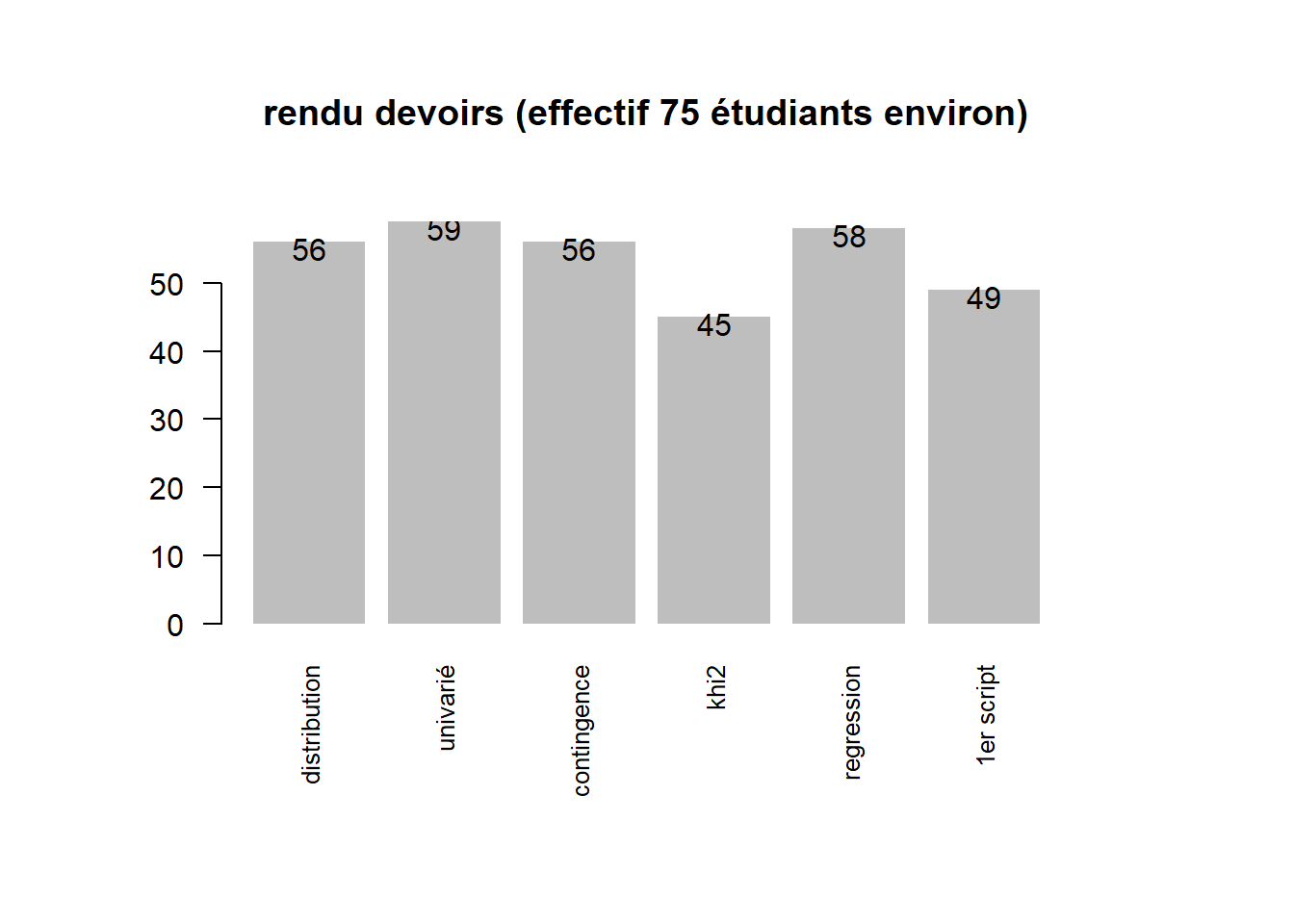
3 Présentation rapide (vous êtes nombreux !)
3.1 Qui sont les étudiants ?
- 84 étudiants inscrits sur 3 cours (54 présents environ)
Les questions posées sont sur le passé / futur des étudiants, leur appétence en stats
etudiant <- read.csv("data/etudiantModifie.csv", fileEncoding = "UTF-8")
png("img/quisontils.png", width = 10000, height = 10000, res=1000)
#par(mar = c(2,16,2,4))
par(mfrow = c(2,2))
for (i in c(5, 4,3,2)){
  (mar = c(2,30,2,4))
  barplot(table(etudiant [,i]), border = NA,
          horiz = T, las = 2, cex.names = 0.8,
          main = names (etudiant) [i])
}
dev.off()
## png
## 2
3.2 Présence et rendu des devoirs : chiffres clés
3.2.1 Effectif et cours
| Cours | TD1 | TD2 | TD3 |
|---|---|---|---|
| C1 | 21 | 24 | 7 |
| C2 | 20 | 20 | 19 |
| C3 | NA | NA | NA |
| C4 | NA | NA | NA |
| C5 | NA | NA | NA |
| C6 | NA | NA | NA |
| C7 | NA | NA | NA |
| C8 | NA | NA | NA |
| C9 | NA | NA | NA |
| C10 | NA | NA | NA |
| C11 | NA | NA | NA |
| C12 | NA | NA | NA |
| C13 | NA | NA | NA |
presence$numCours <-as.numeric(substring(presence$Cours,2,3))
par(mfrow = c(3,1))
barplot(presence$TD1~presence$numCours, col="chartreuse", beside = T, main = "Evolution de la présence groupe 1", xlab = "cours", ylab = "nb"
        , border = NA, legend =  F)
barplot(presence$TD2~presence$numCours, col = "cyan", beside = T, main = "Evolution de la présence groupe 2", xlab = "cours", ylab = "nb"
        , border = NA, legend =  F)
barplot(presence$TD3~presence$numCours, col="darkorange",beside = T, main = "Evolution de la présence groupe 3", xlab = "cours", ylab = "nb"
        , border = NA, legend =  F)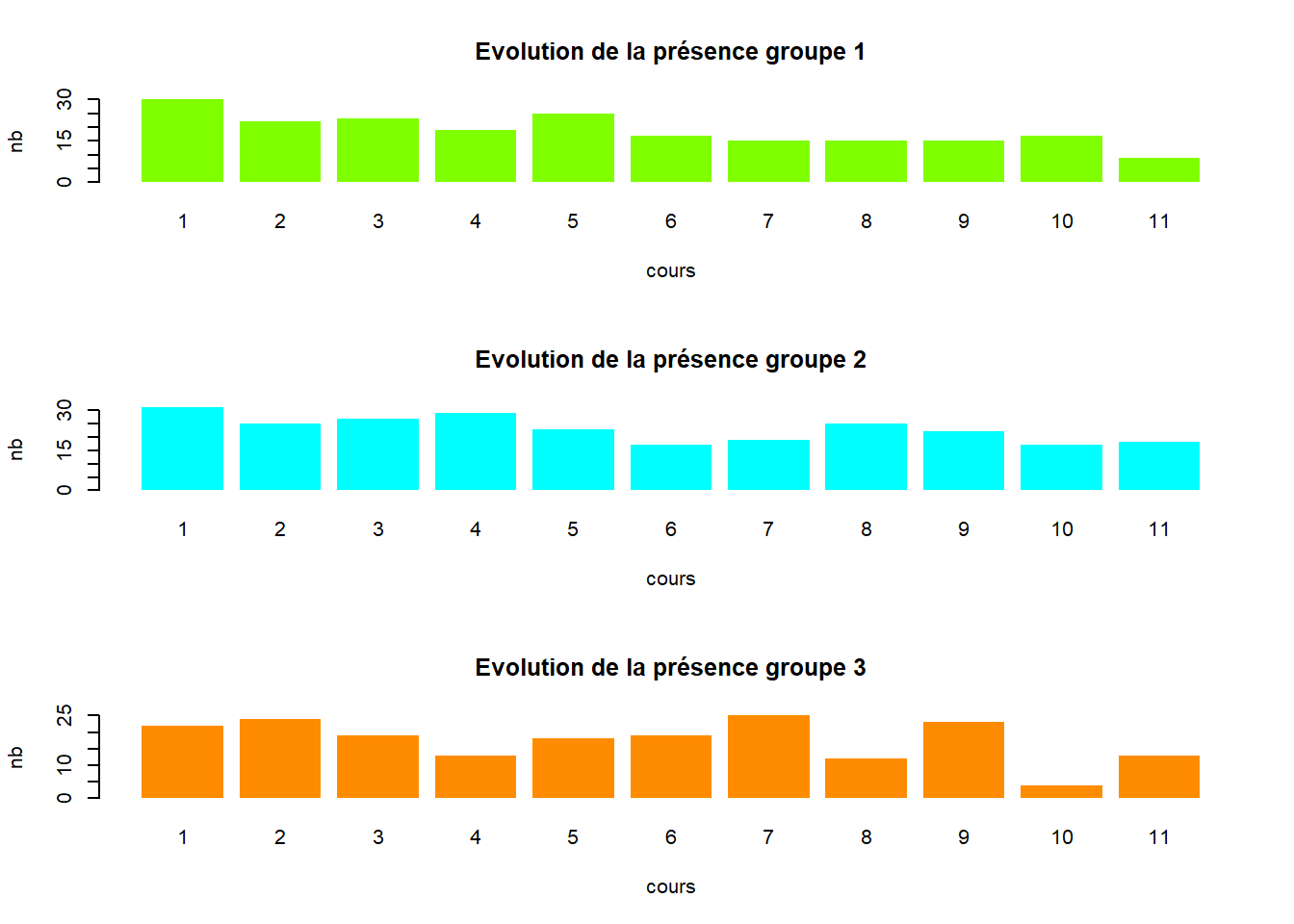
3.2.2 Les rendus d’exercices
Attention, les exercices sont à rendre 2 jours avant le cours (temps de la correction),
gr 3 : mercredi 20 h
gr 1 et 2 : jeudi 20 h
Aucun retard toléré
data <- read.csv("data/notesDM1_7.csv", na.strings = "-", fileEncoding = "UTF-8")
data <- data [, c(7:12)]
names(data)
## [1] "Devoir.MAISON.2...Valeurs.centrales.et.dispersion..Brut."
## [2] "Devoir.MAISON.4...contingence.agrégats.communes..Brut."
## [3] "Devoir.MAISON.5...khi2..Brut."
## [4] "Devoir.MAISON.3...régression.entre.2.agrégats.financiers..Brut."
## [5] "Devoir.MAISON.1...Dénombrement..Brut."
## [6] "Devoir.MAISON.7...boite.à.moustaches..Brut."data <- data [, c(5,1,4,2,3,6)]
titre <- c("1_distribution", "2_univarié", "3_regression", "4_contingence", "5_khi2", "6_variance")
png("img/rendu.png", width = 600, height = 600, res = 100)
par( mfrow = c(2,3))
tot <- length(data)
i <-1
for (i in c(1:tot)){
tmp <- table(data [,i])
barplot(tmp, cex.names = 0.8, las = 1,
main = paste0(titre [i], " (", sum(tmp), " observations)"), border = NA, col = "wheat")
}
dev.off()## png
## 2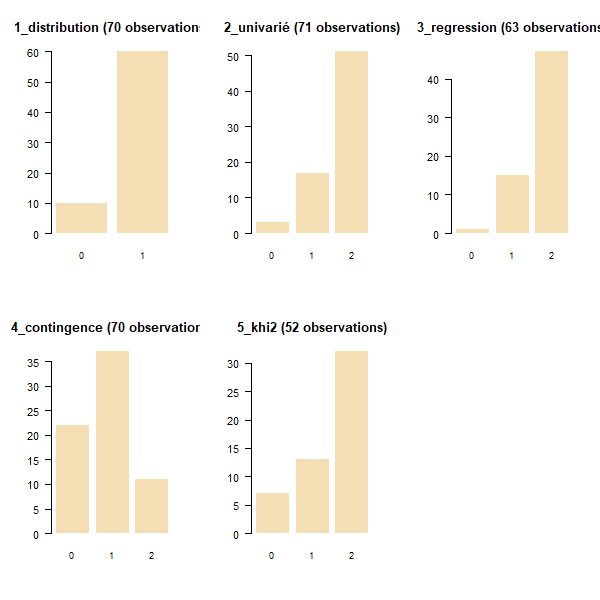
- Le critère externe : des points faciles ?
le nom du fichier
le temps du rendu (avant la limite)
- Augmentation des erreurs avec l’exercice 4
Attention à la consigne !
3.3 Notes finales
note <- read.csv("data/noteFinales.csv", fileEncoding = "UTF-8", na.strings = c("EN ATTENTE", "NA","-"), dec = ",")
summary(note)
png("img/noteFin.png")
hist(note$NOTE.FINALE, main = "Etalement note finale - 64 obs", freq = T, border = NA)
abline(v = mean(note$NOTE.FINALE, na.rm = T),  col = "red")
abline(v = median(note$NOTE.FINALE, na.rm=T), col = "blue")
dev.off()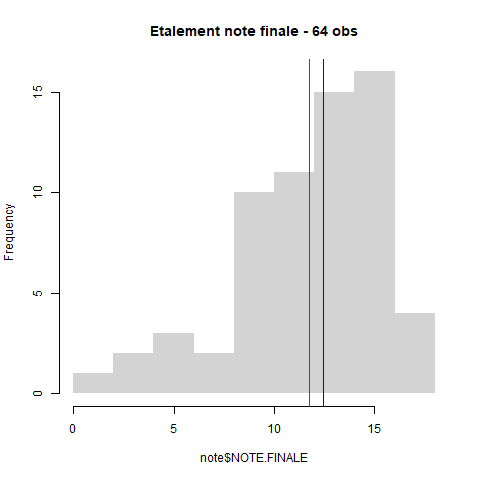
4 Ressources autre que la bibliographie officielle
Pour R, la base de tout est
R et espace (https://archives.framabook.org/r-et-espace/index.html)
L5GEABIM Analyses bivariées et multivariées